Beaches of
NormandyTours
NormandyTours
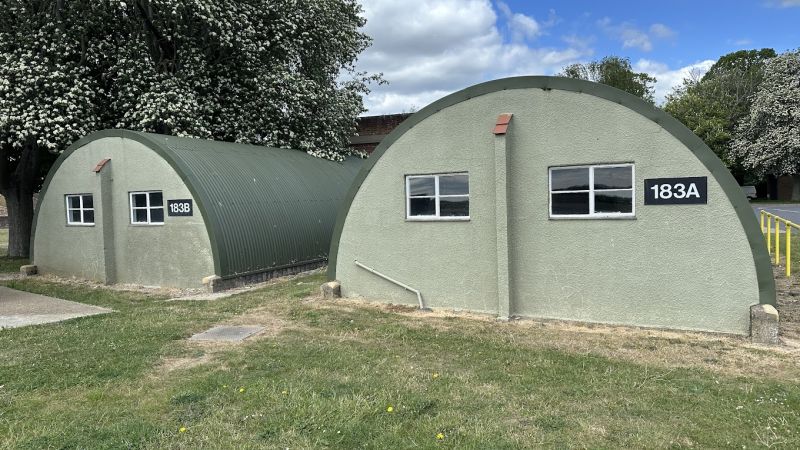
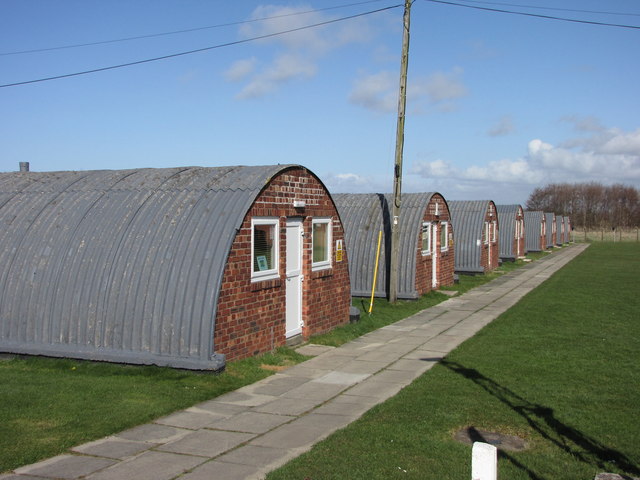
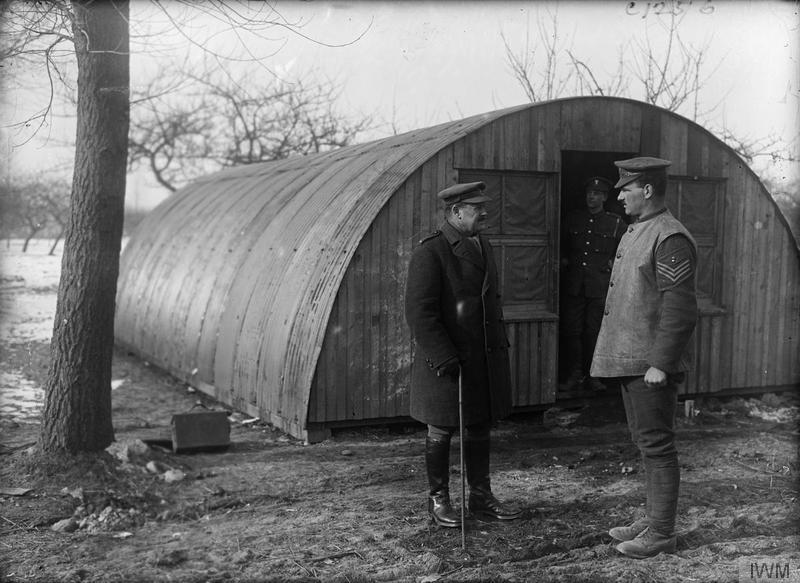
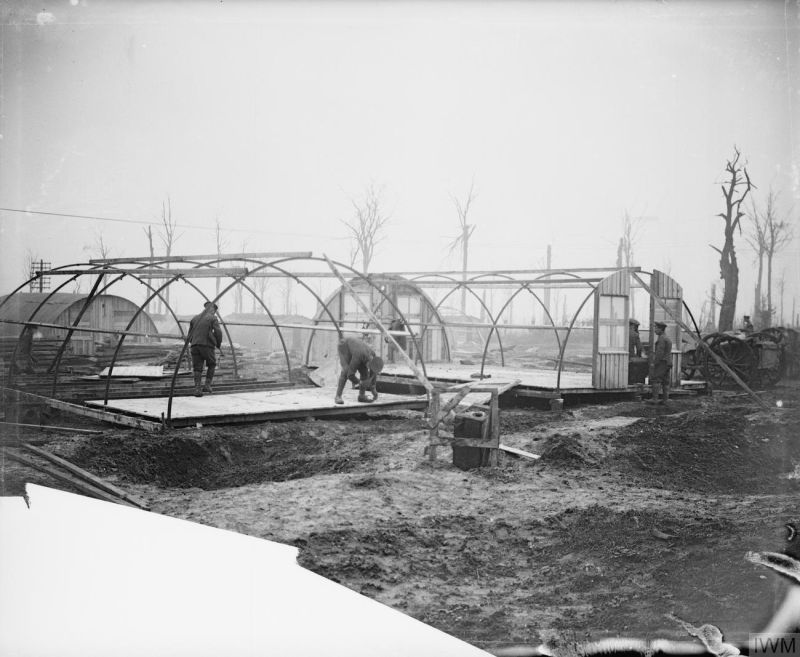
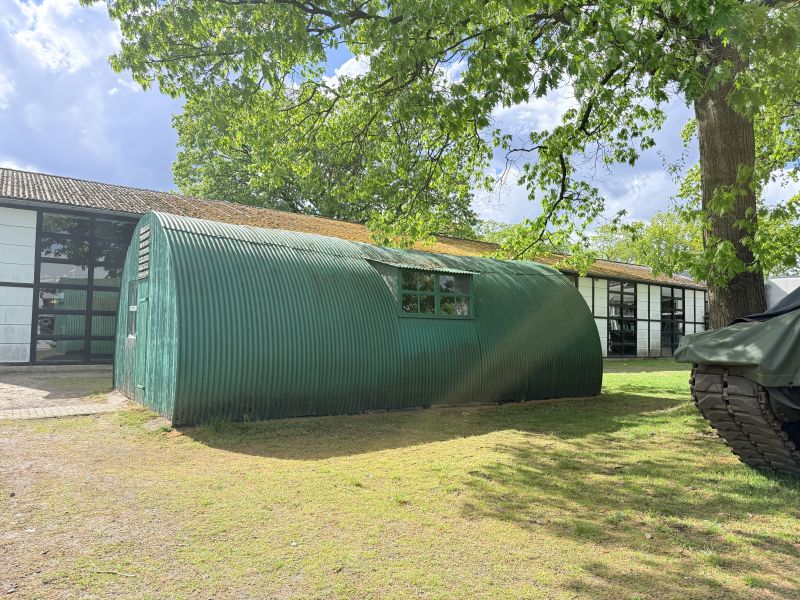
The hut consists of a set of ribs with the distinctive semi-cylindrical sheets of corrugated galvanized iron placed over them. (The sheets are corrugated, given their ridged shape, to increase structural strength while retaining a light weight.) The front and back of a hut consist of a wooden frame with weatherboards nailed to it on the outside. The floor is made from tongue-and-groove floorboards, with concrete as an alternative. The original version of the hut also had a wooden inner lining, but Nissen learned that soldiers often pried it up with their bayonets to use it as fuel for their stoves, and came up with an alternative design where the interior lining was also corrugated iron, only the corrugation ran horizontally. The Nissen hut came in several sizes, 16, 24 or 30 feet in width. (4.9, 7.3 or 9.1 m) Each sheet was six feet (1.8 m) long, and several could be joined together to create a hut whose length was any multiple of that number.
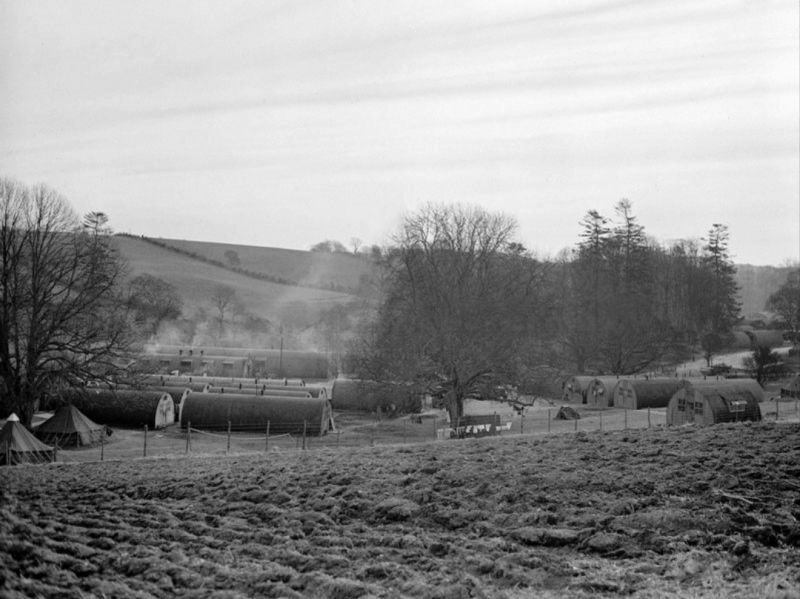
At least 100,000 Nissen huts were built during World War I, and not all were used as barracks. Some 10,000 were turned into hospitals, while many others served as stores, workshops, mess rooms and even churches. They were noted to be drafty and damp (steel surfaces and relatively poor heat insulation led to condensation), but they were still far preferable to canvas tents.
Nissen patented his hut in 1916, and was paid some £13,000 by the British government after the post-war hut sales. He was awarded the Distinguished Service order and retired from the army at the rank of lieutenant-colonel.
.jpg)
Blister hangars
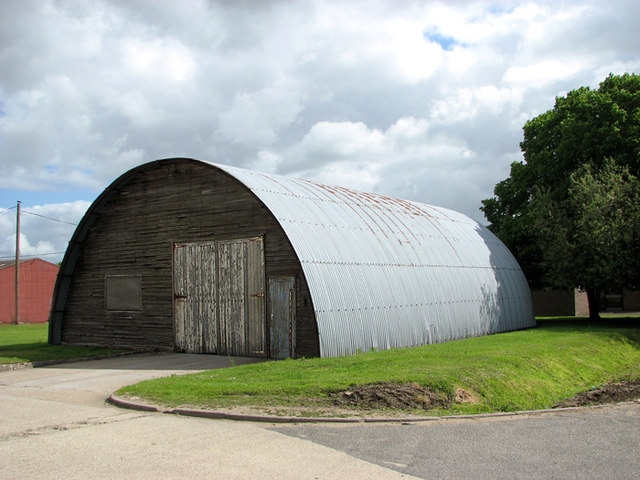
A collective name for many different sizes and specific shapes, blister hangars were British aircraft hangars following the general Nissen hut design but writ large. They originally had wooden ribs supporting a cladding of profiled steel sheets, but were later changed to steel lattice ribs and corrugated steel ribs. Unlike the smaller huts, the hangars' arches were not horizontal (or near so) at the point of contact with the ground.
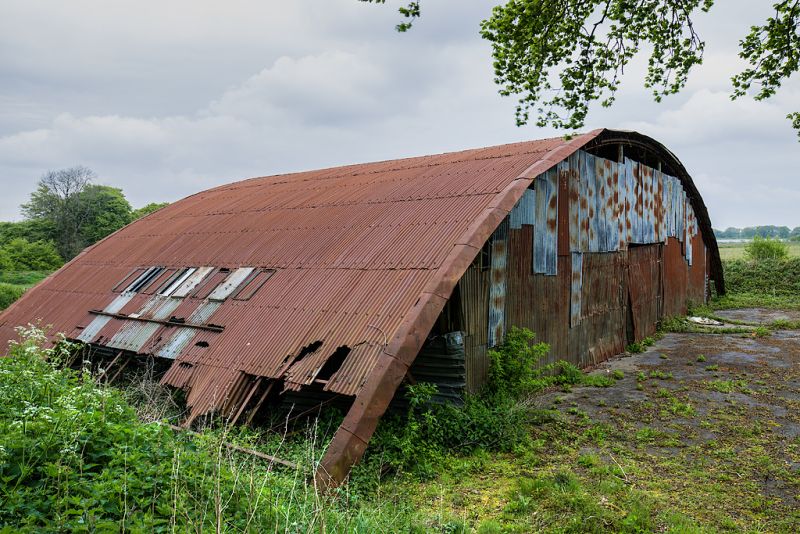
The Quonset hut
The best-known American derivative of the Nissen hut, the Quonset hut was born in 1941, when the U.S. Navy requested a light-weight all-purpose building that could be shipped anywhere and erected by unskilled labor. One hut could be assembled by a 10-man team in a day using only hand tools.
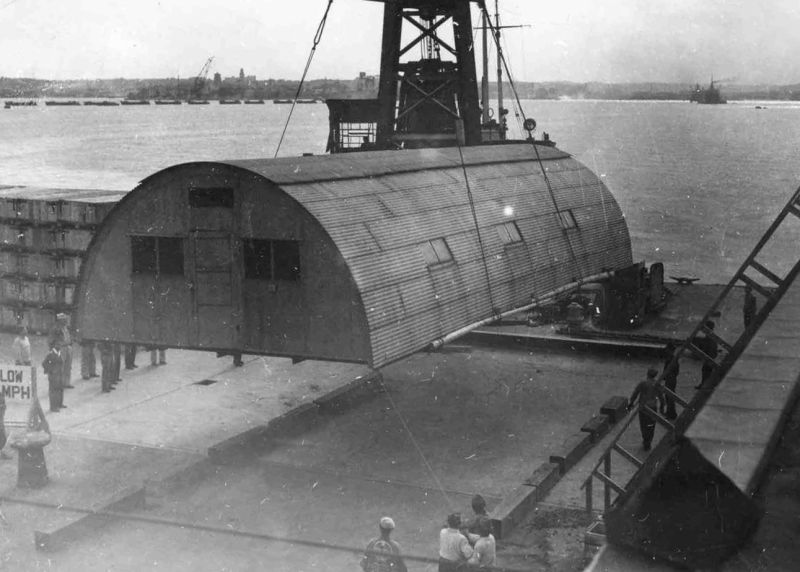
The hut got its name from Quonset Point, a peninsula at the Davisville Naval Construction Battalion Center on Rhode Island, where it was first built. The word "Quonset" means "small, long place" in the Algonquin language, which originally referred to the location, but could arguably also describe the hut named after it.
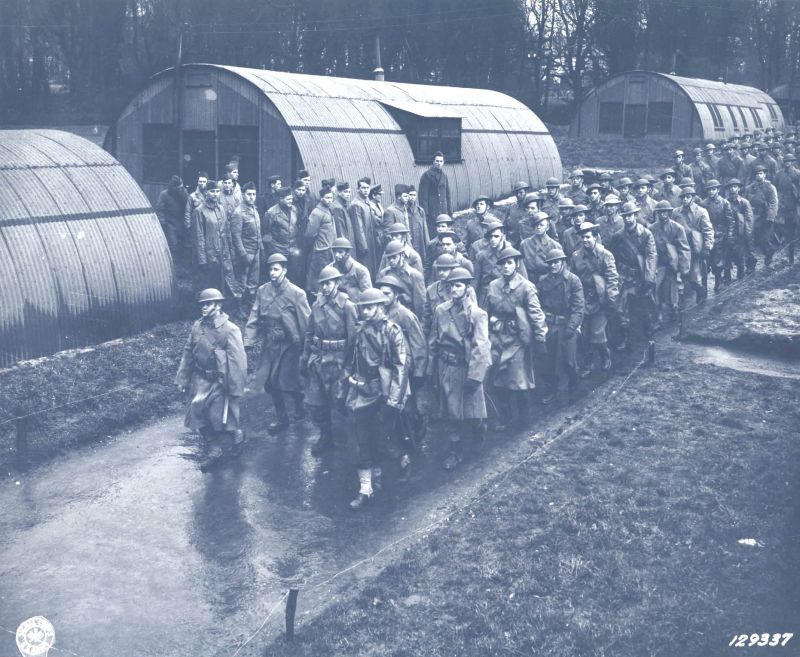
Like the Nissen hut, the Quonset hut also came in several sizes and designs. The original version was 16 ft by 36 ft (4.9 × 11 m). The most common design was 20 by 38 ft (6.1 × 14.6 m). Even larger versions, including one 40 by 100 ft (12 × 30 m) were designed as warehouse models. One particular redesign solved the Nissen hut's long-standing problem of not having vertical walls to place furniture against. The bottom four feet were straight corrugated steel walls, and the distinctive arch only began above those. This design also managed to be 60% less expensive and 35% lighter than its predecessor.
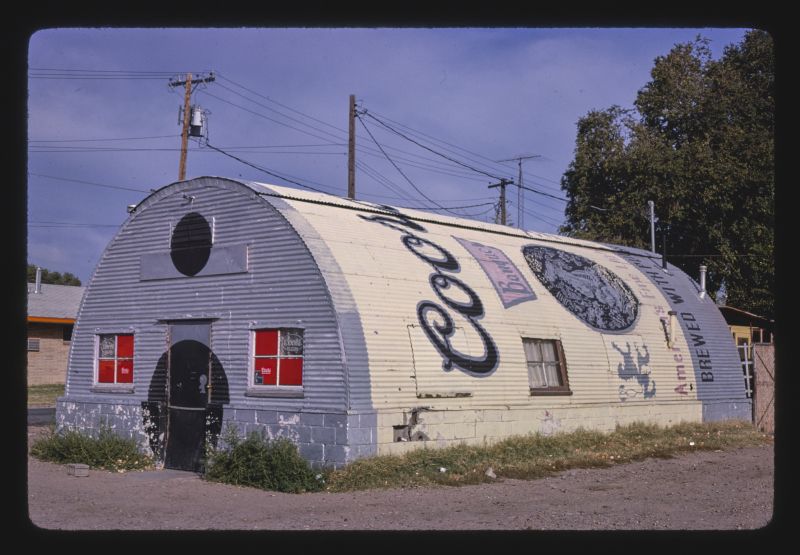
Some 170,000 Quonset huts were built during World War II, and some still remain as outbuildings, businesses or homes. Several companies sell various designs under the collective "Quonset" name to this day. Surplus Quonset huts became popular housing in Hawaii after the war, where they're known as "kamaboko houses" after a similarly-shaped Japanese food. One is left of the Quonset Hut 33 at Pearl City close to the sites of our Pearl Harbor Anniversary Tour.
The Pacific hut
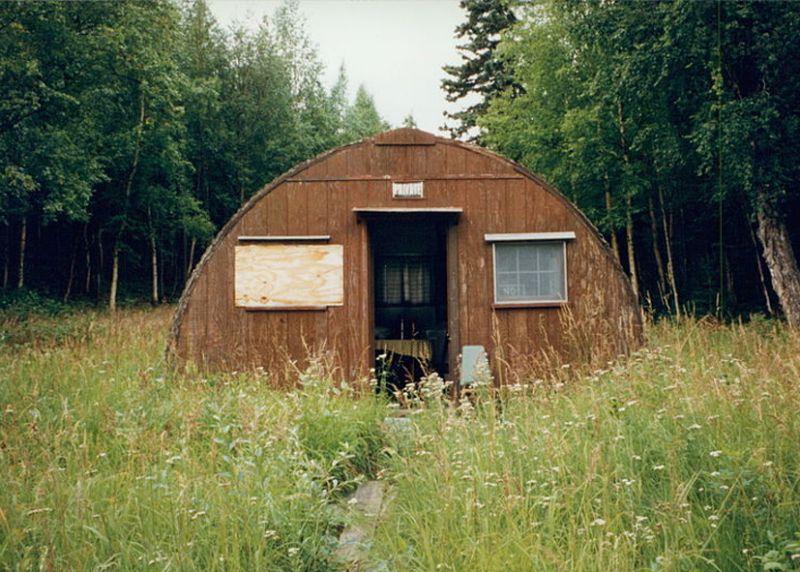
The Pacific hut was an all-wood version of the Quonset hut, appropriately designed for the Pacific. Steel rusts quickly in humid tropical condition, and this wooden structure both avoided that problem, and also eased pressure on the limited supply of steel. It turned out that the wooden construction also worked well in Arctic climates due to having better heat insulation than any metal structure.
The Jamesway hut
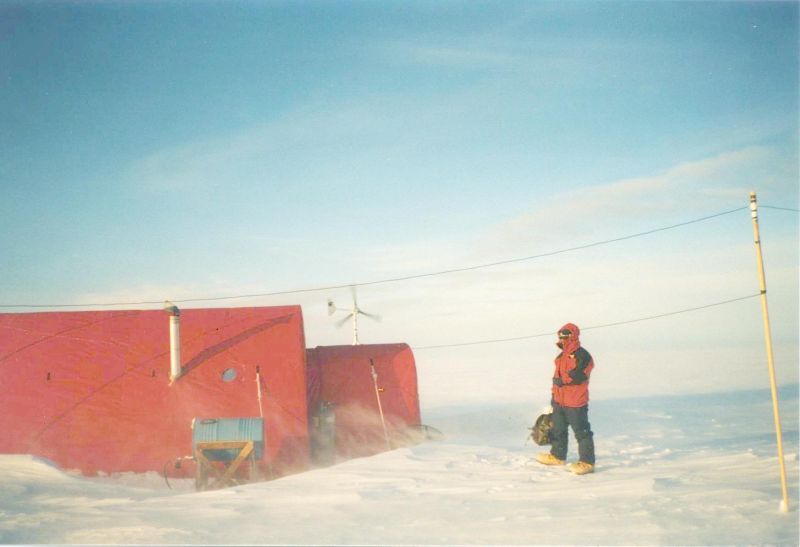
The Jamesway hut was an Arctic version of the Quonset, with wooden ribs covered by a soft skin of insulated fabric: blankets combined with glass fiber, flameproof muslin, and plastic-treated, vermin-, water- and fire-proof cotton. The hut is rather small at 16 × 16 ft (5 × 5 m), and the wooden packing crates double as the floor.
The hut earned recognition during the campaign to liberate the Aleutian Islands off Alaska from the Japanese. It was also used during the Korean War, and is still used by the U.S. Antarctic Program to this day.
The Armco hut
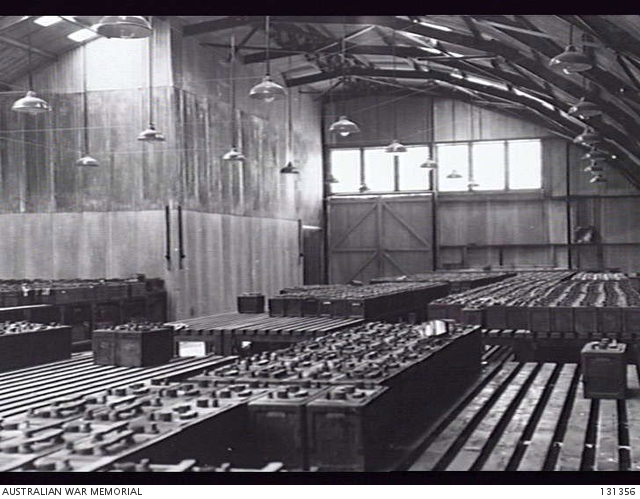
Built by the Armco International Corporation, this version was built with heavy steel that allowed it to be buried in six feet of dirt without collapsing. It was usually used as a bunker or an ammunition storehouse.
The Italian Chapel: a hut of reconciliation
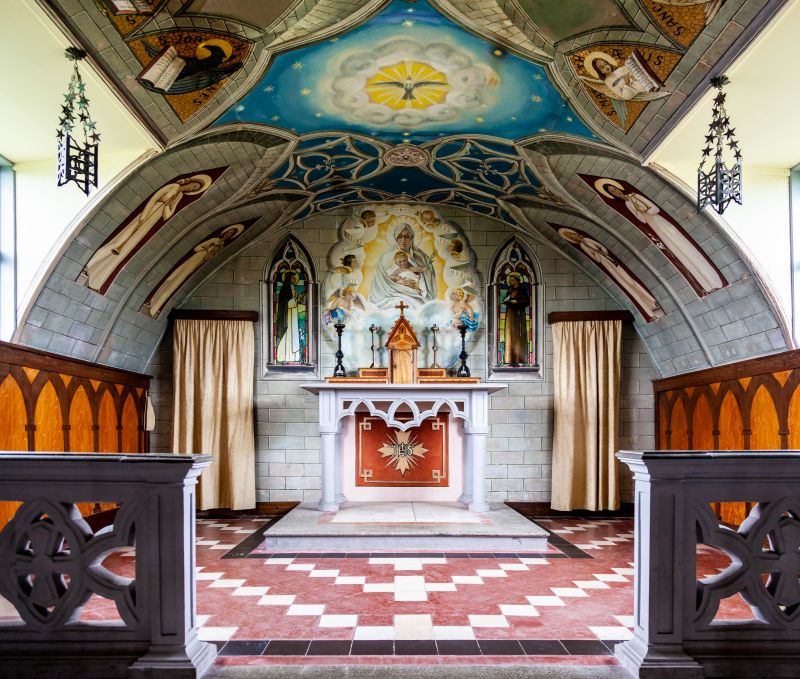
While not a type of hut, this unique structure deserves separate mention for its symbolic importance. 550 Italian prisoners of war captured in North Africa were brought to the Orkney Islands in the north of Scotland in 1942, with 200 of them placed in a POW camp on Lamb Holm, one of the islands of the archipelago. The commandant agreed with the camp's Catholic priest that the prisoners should be allowed to build a Catholic church for their own use. Two Nissen huts were joined end-to-end and given to the prisoners to decorate. The facade was built from concrete, candle holders fashioned from corned beef tins, and the baptismal font made from a car exhaust. One of the prisoners, a talented painter called Domenico Chiochetti, painted most of the interior with help from his comrades.
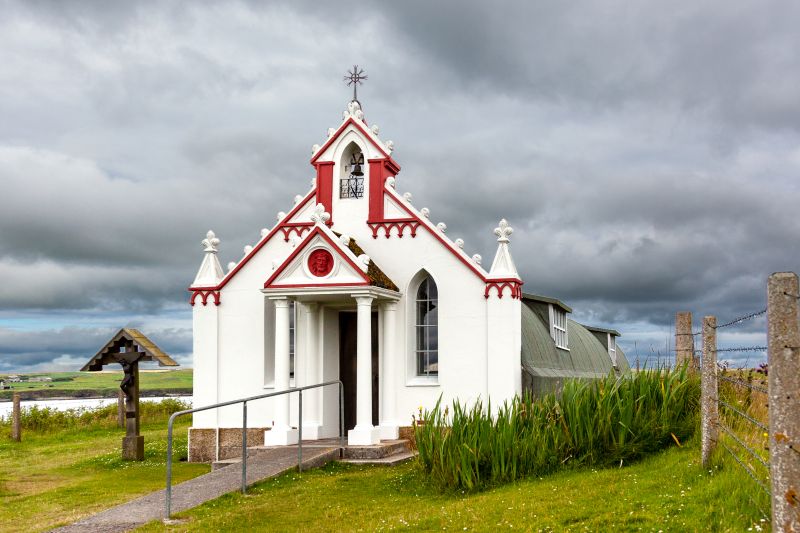
The prisoners were released shortly before the end of the war, when the chapel was not yet complete. Chiochetti decided to stay behind and finish decorating the already consecrated chapel. The locals set up a committee for the preservation of the chapel in 1958, and Chiochetti himself returned on two occasions to help renovate the building. Some of the other former prisoners returned in 1992 to commemorate their arrival to the island. The chapel is still used for worship today, is a popular tourist destination, and is one of the best-known symbols of post-war reconciliation in Britain.
If you want to see a Nissen hut or its derivates, join us on our Britain at War Tour, Third Reich Tour, World War I Tour or Pearl Harbor Anniversary Tour!





Beaches of Normandy Tours
Beaches of Normandy Tours SAS, Normandy, France
Band of Brothers Tours
Band of Brothers Tours FZCO, Dubai, UAE